
Mental Training for Better Physical Performance Boost Focus Reaction Time and Agility

Your body can be ready, strong, warmed up, and fully trained, but if your brain is a half-step late, you’ll feel it. A missed catch. A slow first step. A wobbly balance check on the stairs. A delayed reaction when a car brakes in front of you.
Physical performance isn’t only muscles, joints, and conditioning. It’s also how quickly your brain sees, sorts, decides, and sends the right signal to your body. That’s where mental training comes in.
The good news is that focus, reaction time, visual tracking, and mental agility can be practiced. You don’t need a lab or a fancy setup to start. A few short drills, done often, can make movement feel sharper and more controlled.

Your brain leads the movement
Every movement starts with information. Your eyes spot a cue. Your brain reads it. Then your body responds.
In sports, that cue might be a ball leaving a pitcher’s hand, a defender shifting weight, or a teammate cutting toward open space. In daily life, it might be a curb, a slippery floor, a child running across a sidewalk, or a dropped object you try to catch.
That process has a few key parts:
Perception
Seeing or sensing what’s happening around you.
Decision-making
Choosing what to do next.
Motor response
Sending the message to your body and moving with control.
Adjustment
Correcting your movement as the situation changes.
When these steps get faster and cleaner, performance improves. You feel more coordinated because your brain and body are working together with less delay.
This is why mental agility matters so much. It helps athletes react under pressure, but it also helps with balance, driving, walking through crowded areas, and staying steady during unexpected movement.
Train reaction time with simple drills
Reaction time isn’t just “being quick.” It’s the speed of noticing, choosing, and moving. The best drills include some kind of surprise, because real life rarely gives perfect warning.
Try these a few times per week.
Ball drop drill
Stand facing a partner. Have them hold a tennis ball at shoulder height, then drop it without counting down. Catch it before it hits the ground.
To make it harder:
Start with your hands at your sides
Use your non-dominant hand
Have your partner vary the drop height
Catch two different colored balls based on a callout
This sharpens visual attention, hand speed, and decision-making.
Color call movement drill
Place four colored cones or objects around you. Have a partner call out a color. Move to touch it as quickly as possible, then return to center.
No partner? Use a random color app, shuffled cards, or sticky notes turned over one at a time.
This drill builds quick thinking and fast body response. It’s great for sports that require cutting, defending, chasing, or shifting direction.
Sound cue starts
Get into an athletic stance. Start moving only when you hear a clap, whistle, or verbal cue.
Mix up the movement:
Sprint forward
Shuffle right or left
Backpedal
Jump and land balanced
The goal is control, not chaos. Move fast, then stop clean.

Build better eye coordination
Your eyes do more than see. They help guide timing, balance, posture, and accuracy. Poor visual tracking can make movement feel clumsy, even when strength and fitness are solid.
Eye coordination drills are especially useful for sports like baseball, tennis, basketball, soccer, hockey, volleyball, pickleball, and martial arts. They also help with reading movement in daily activities, like crossing a street or catching something before it falls.
Near and far focus
Hold your thumb about 12 inches from your face. Pick an object across the room. Look at your thumb for two seconds, then shift your gaze to the far object for two seconds.
Repeat for 60 seconds.
This trains your eyes to switch focus quickly, which matters when tracking objects at different distances.
Smooth tracking
Hold a pen or small ball at arm’s length. Move it slowly side to side, then up and down. Keep your head still and follow it with your eyes.
Do this for 30 to 60 seconds.
If your eyes jump or lose the object, slow down. Clean tracking beats speed.
Peripheral awareness drill
Stand facing forward. Hold both hands out to your sides. Wiggle your fingers and slowly bring your hands inward until you can see the movement without turning your head.
You can also have a partner hold up fingers in your side vision while you call out the number.
This helps you notice movement outside your direct line of sight. In sports, that might be a defender. In daily life, it might be a cyclist passing from the side.
Strengthen focus under pressure
Focus is trainable, but it’s not the same as trying harder. Good focus means knowing where to place attention, how to reset it, and how to keep it steady when distractions show up.
A simple way to practice is to add mental load to movement.
Count while moving
Do a basic agility ladder pattern, jump rope, or light footwork drill while counting backward by threes.
For example, start at 50 and count:
50, 47, 44, 41…
This makes your brain process information while your body keeps moving. That’s closer to real performance than doing one thing at a time.
Use a reset word
Pick one short word that brings you back to the task. Good options include:
“Now”
“Set”
“Breathe”
“Track”
“Ready”
Use it after mistakes, distractions, or pauses. The word acts like a mental anchor. It keeps one bad rep from turning into five bad reps.
Practice quiet eyes
Before a movement, pick one clear target and hold your gaze there briefly. For a basketball shot, it might be the rim. For a catch, it might be the ball. For balance work, it might be a fixed point on the wall.
This helps reduce visual noise and improves control.

Make mental agility part of your routine
Mental training works best when it’s short, consistent, and tied to movement. You don’t need hour-long sessions. In fact, five to ten focused minutes can be plenty.
Here’s an easy weekly rhythm:
Day | Focus | Example |
Monday | Reaction time | Ball drop drill and sound cue starts |
Wednesday | Eye coordination | Near and far focus with smooth tracking |
Friday | Focus under pressure | Footwork with counting or color calls |
Weekend | Mixed practice | Combine reaction, vision, and balance drills |
Keep the quality high. Stop before fatigue turns the drills sloppy. The brain learns from clean reps, clear cues, and quick feedback.
Also, make it fun. Compete with a friend. Time a drill. Track how many catches you make. Change the cues. The more engaged you are, the better your brain pays attention.
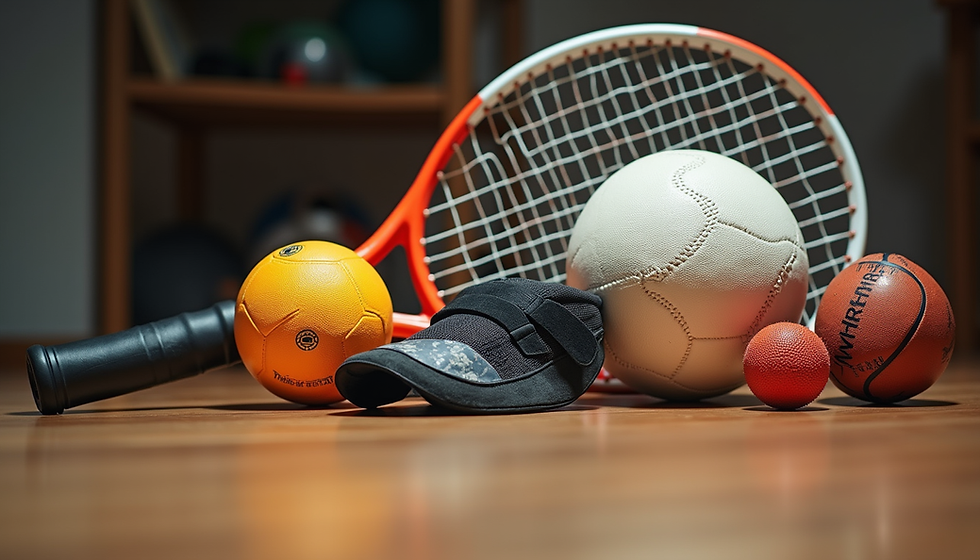
If you want a ready-made way to train visual processing, reaction speed, and focus, check out the Visual Neurocognitive Performance Training Kit. It’s built for practical training you can add to regular workouts or sport practice.

Mental training doesn’t replace strength, skill work, conditioning, or good recovery. It adds another layer. When your brain processes faster and your body responds cleaner, movement feels more confident.
Start small. Pick one reaction drill, one eye coordination drill, and one focus drill. Practice them a few times this week. Those tiny moments of sharper attention can show up everywhere, from the court or field to everyday life.


Comments